

For seven-year-old Finley Moss x’28, the magic of her first airplane ride wasn’t the view outside her window or the flight attendants’ snack cart but the miracle of the massive steel tube transporting her family from Eau Claire, Wisconsin, to visit relatives in Thailand.
“I just remember thinking about how insane it was that this giant metal plane could be in the air for hours at a time,” she says.
Today, Moss is mastering the once-inconceivable feat of flight as a student in the UW’s Department of Mechanical Engineering, where she majors in engineering mechanics with an aerospace emphasis.
Help us ensure the UW remains an affordable, world-class institution and engine of innovation for generations to come.
Make a Gift“My whole life, I’ve really loved learning how things work,” she says. “I love math, I love problem-solving, and I love the glorifying feeling of when you get something right.”
For Moss, nothing feels more “right” than studying flight. After her first plane ride, her infatuation with aviation followed her into adolescence, when she became a cadet with the Civil Air Patrol at the Chippewa Valley Regional Airport. The program provided an opportunity to learn more about the aviation industry, but it still wasn’t close enough to the cockpit.
Moss was a sophomore in high school when her father sent her an advertisement for flight lessons in her hometown.
“It was just about the time that I was getting my driver’s license,” Moss says. “I was like, ‘I don’t know if I should be allowed to fly an aircraft when I am just learning the ways of the road.’ ”
Learning to fly a plane proved similar to learning to drive a car: all it took was a patient instructor and a willingness to learn.
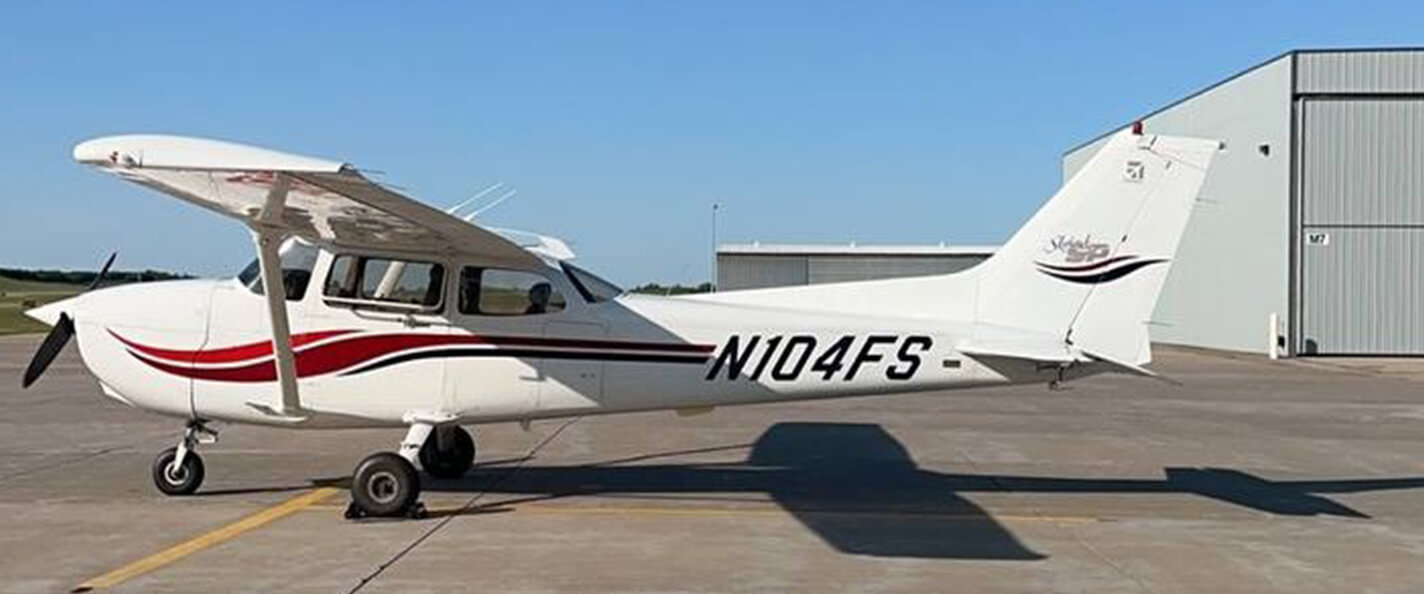
“I decided I’d take the leap of faith and do it, and I fell in love with it,” Moss says. “Everything about being in the aircraft was just fascinating.”
But even piloting the airplane wasn’t immersive enough for Moss, whose most valuable flight lesson was that she was more interested in how the plane flew than she was in flying it herself.
“My instructor was a previous [aircraft] mechanic, so while we’d be flying, he would point out little things, such as the pitot tube, and mention how it would work or contribute to the aircraft,” Moss says. “We would often work on the aircraft, too, so I would be able to learn, and that is really what made me switch over to the engineering side of it.”
Moss’s time in the skies still serves her on the ground. While operating the College of Engineering’s flight simulator, which replicates the cockpit of a Cessna 172 Skyhawk, Moss is able to see the data behind the phenomena she experienced firsthand as a pilot. As an undergraduate assistant on the simulator, she also teaches senior engineering students the basics of flying and helps demonstrate concepts they’ve only studied in class.
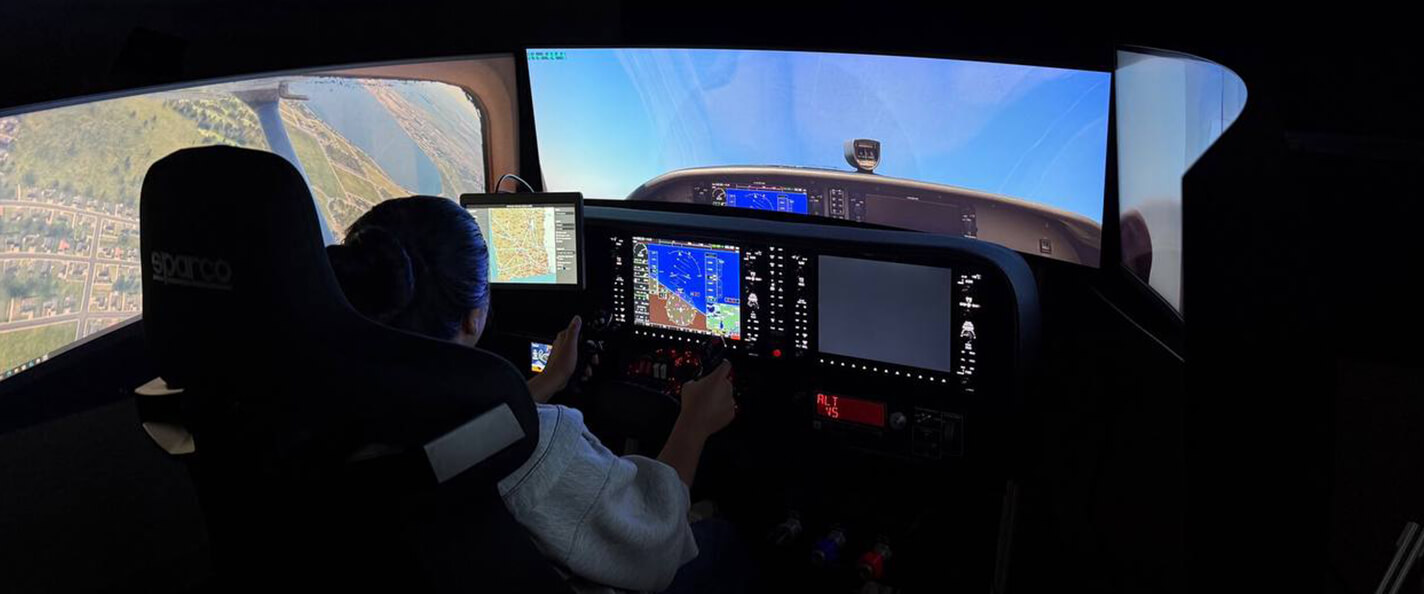
“It’s been absolutely beautiful seeing them go in and fly the simulator and be able to feel the things that they learned, calculated, and derived [from] their entire college career,” she says.
Moss’s own career in aerospace has just taken off, but it’s already reaching new heights: in the fall of 2026, she will be among the first class of students in the UW’s new aerospace engineering major. The program will create a designated home for prospective aerospace engineers at the UW, Moss says, and it will better position them in the competitive job market that follows.
“If I tell job recruiters that I’m [majoring in] ‘engineering mechanics with an emphasis in aerospace,’ first off, it’s a mouthful. But oftentimes it also requires further explanation. … Is it mechanical? Is it aerospace? What is it?” she says. “Having that official aerospace engineering degree makes the career pathway that much clearer.”
Whether that pathway leads to a job using wind tunnels to test Formula One race cars, exploring the potential of plasma-ion propulsion in deep-space travel, or developing more-efficient aircraft, Moss credits her myriad possibilities to her time at the UW.
“It kind of made me realize I should stop looking at what I think engineering is and more what I want to tailor it to be,” she says.


