

What does it really take to become Bucky Badger?
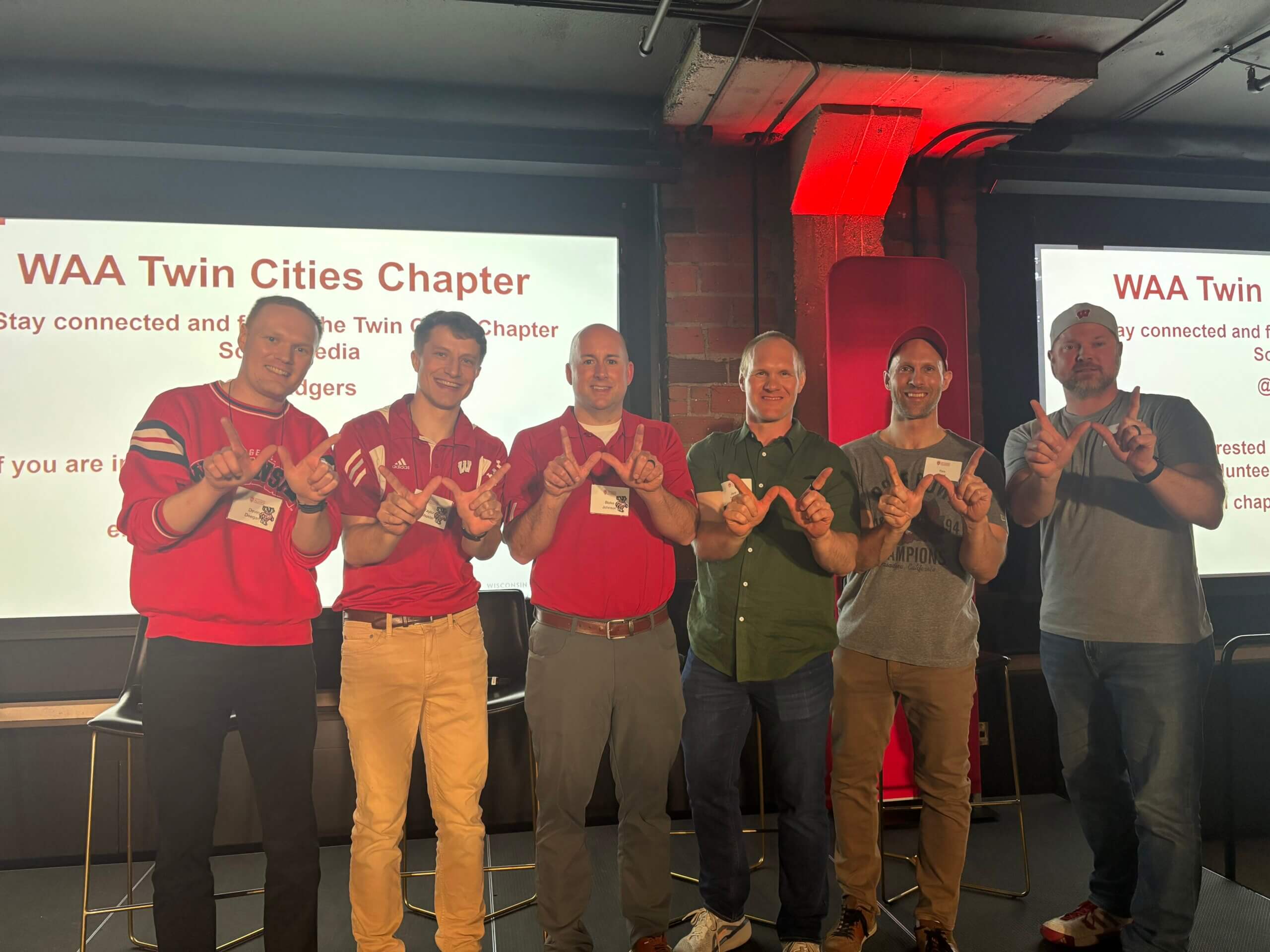
That question drew Badger alumni and friends together in Denver and Minneapolis this spring for Wisconsin Idea Spotlight: Becoming Bucky — a pair of special events presented by the Wisconsin Alumni Association (WAA) that featured a screening of the PBS Wisconsin documentary Bucky!, followed by lively panel discussions with the people who know the iconic mascot best.
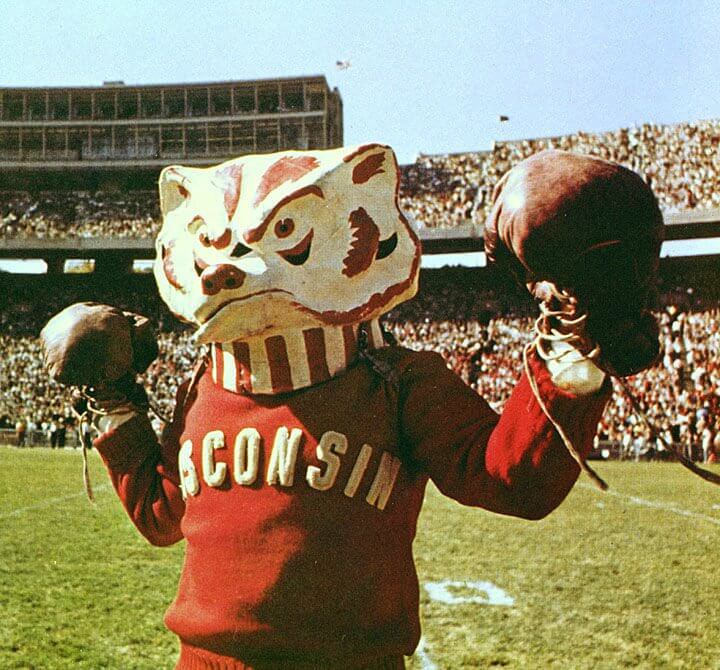
From a former Bucky, who served from 1966 to 1968 and wore the original snarling papier-mâché head, to current members of the Bucky team, who have perfected their trademark walk and polka moves, the evenings celebrated everything that makes Bucky — and the Badger community — one of a kind.

From Papier-Mâché to Carbon Fiber: A Legacy Built on Pride
The documentary traces Bucky’s origins from the lead miners of southwestern Wisconsin who inspired the “Badger State” nickname, through the chaotic era of actual live badgers on the sidelines at Camp Randall, to the November 1949 Homecoming pep rally when Bill Sachse ’50 and Bill Sagal ’51 — two UW students from Sheboygan — introduced the world to Buckingham U. Badger.
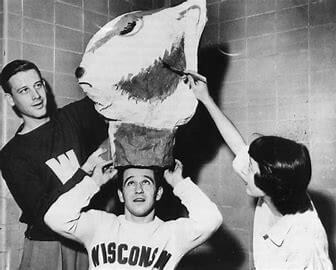
For alumni in both cities, seeing historic photographs on the big screen and hearing the stories was a powerful reminder of how deep the roots of Badger pride really run.
“In that film, there were a couple of pictures that were me as Bucky from many years gone by,” said Jack Wesoky ‘68, who served as Bucky from September 1966 to June 1968 and surprised the Denver audience by attending the event. “I’m kind of like a Bucky emeritus.”
Jack’s tryout was considerably less grueling than today’s process: his roommate happened to be dating a cheerleader, who lobbied on his behalf. He got the job. And for two years, he was the only Bucky — doing the work of five, wearing the original sneering, snarling head, and making a road trip in a university station wagon using a gasoline credit card.
“The only road trip I took was to Iowa,” he recalled. “Six cheerleaders and me piled into a green Ford university station wagon. Finding a place to sleep and eating was on our own. It wasn’t quite as glamorous back then.”
He also had a close call most Buckys can’t claim: while charging 80 yards across the field in a papier-mâché head with no ventilation, he nearly became the first person to need the football team’s brand-new oxygen equipment.
What It Takes to Wear the Head
For those who have suited up more recently, the path to becoming Bucky is both more structured and intense.
Josette Jaucian ’97, director of the UW Spirit Squad since 2000, walked the Denver audience through the modern tryout process: a preliminary night of maxing out on push-ups, cheerleader elevator lifts, props stations (alumni bring plungers, garbage cans, and inflatable objects and expect applicants to improvise with them — silently), dance stations spanning polka to R&B to ballet, and a first moment wearing the Bucky head. Candidates who advance, then take to the ice to demonstrate skating ability. Finalists prepare a full two-minute skit with music and props, which is followed by an interview panel, where they’re quizzed on who the chancellor is, who coaches the basketball team, and other essential Badger knowledge.
If you make it through all that, Bucky himself finds you — and kidnaps you to celebrate.
“The team really loves to take hold and train the newcomers,” Jaucian said. “They take such pride in it. If the new guy’s not walking the right way or the signature’s not correct, they will let you know.”
The walk, alumni agreed across both events, is the hardest thing to master. Getting six or seven different people to move identically — with shoulders swaying, elbows up, head bobbing just so — takes months of drilling before a rookie is released to the public.
“Once you’re in suit, it’s like a light switch,” said Sam Reding ’19, who served as Bucky while studying chemical engineering at the UW. “You are Bucky. It’s not Sam in a suit. You are Bucky.”
The Stories That Don’t Make the Highlight Reel
Of course, no Bucky panel would be complete without the stories of times that didn’t go according to plan.
In Denver, Reding shared his most memorable moment: While representing the UW at the Reese’s Senior Bowl in Mobile, Alabama, he was approached by a six-year-old who had no idea who Bucky was. The child, in a perfect Southern drawl, tugged at him and said, “Hey, yo popcorn man, can I get a picture?” — apparently because Bucky looks like a bucket of popcorn. “I started laughing in suit so hard,” Reding said. “That was the only time I ever made a noise in suit.”
Matt Watson, who studied finance at the UW and now serves on the board of the Mile High alumni chapter of WAA, recalled being dispatched in the Bucky suit to a wedding in southwest Colorado — altitude and all — where he got to meet hockey legend and UW women’s hockey coach Mark Johnson ’94. On the drive to the photo spot, an SUV full of Wisconsin fans was pulled over on the side of the road. Watson couldn’t resist. He jumped out in full Bucky regalia, to the absolute shock and delight of his fellow Badgers. “Badgers always run into Badgers,” he said.
In Minneapolis, Blake Johnson ‘08, described the moment during a women’s NCAA hockey championship in Duluth when he was skating through the pregame celebration, unaware that some players had brought their little sisters onto the ice. After one sharp turn later (and one very unhappy little girl), he had learned a critical lesson about the limits of Bucky’s field of vision.
The Archives Behind the Story
The evenings weren’t just about the Bucky alumni. In Denver, Erla Heyns — dean and vice provost of UW Libraries — explained how her team helped bring the documentary to life. The UW Archives contributed approximately 90 boxes of material and processed around 200 research requests for the production, including the historic button collection, photographs spanning decades, and other memorabilia.
“A lot of people don’t really know about the archives or know about the important collection we have,” Heyns said. “And of course we’re collecting for the future as well.”
In Minneapolis, David Pavelich ’98, MA’04, UW Libraries’ associate dean for collections, gave a similar glimpse behind the scenes, describing the archives’ holdings of 33,000 linear feet of material — spanning founding documents from 1848 to digital files and email archives from the present day. The university’s official photographers send all of their work to the archives, meaning every game day moment captured in Camp Randall will eventually be preserved for future generations of Badgers. “When you see the university photographers out there documenting everything from graduation to sporting events,” he said, “all of that content will eventually come into the archive.”
More Than a Mascot
Perhaps the most moving thread running through both evenings was the reminder of what Bucky means beyond the scoreboards.
In Denver, Jack Wesoky reflected on a little girl who grabbed Bucky’s hand at an event long ago and said, “Bucky, I love you.” That, he said, “made it all worthwhile.”
In Minneapolis, panelists talked about visiting children’s hospitals — and about one former Bucky who had been a patient himself at UW Hospital as a child. He always volunteered for those visits because he remembered exactly what it had felt like to have Bucky walk through the door. “There’s a connection,” said Wesoky, “if only for a moment or two, to take the doom and gloom out of the air.”
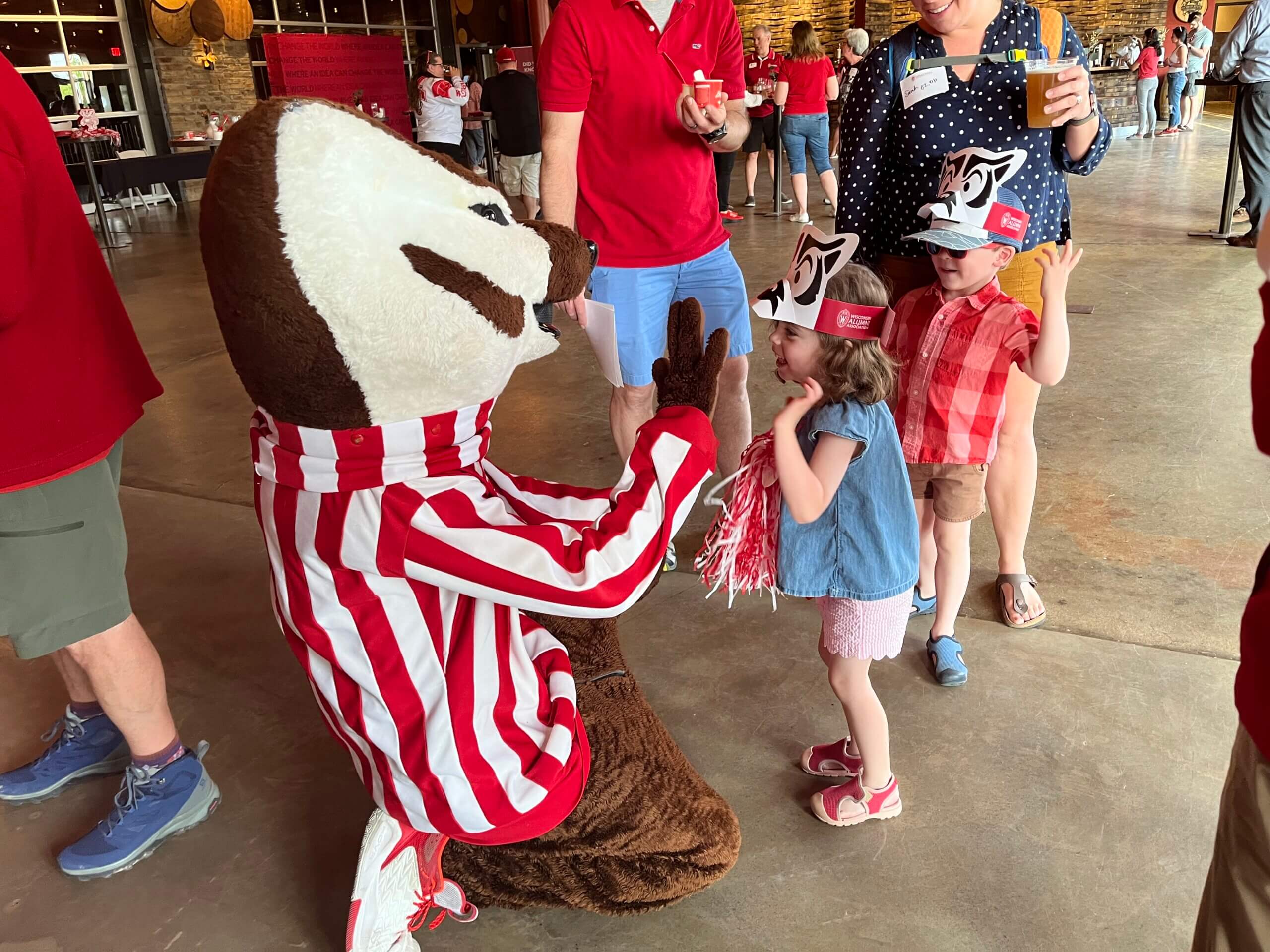
Bucky, after all, isn’t just a mascot. He’s Wisconsin. Young and old, near and far — on a red shirt, or in the arms of a child at a hospital. Wherever Badgers gather, Bucky is there.


