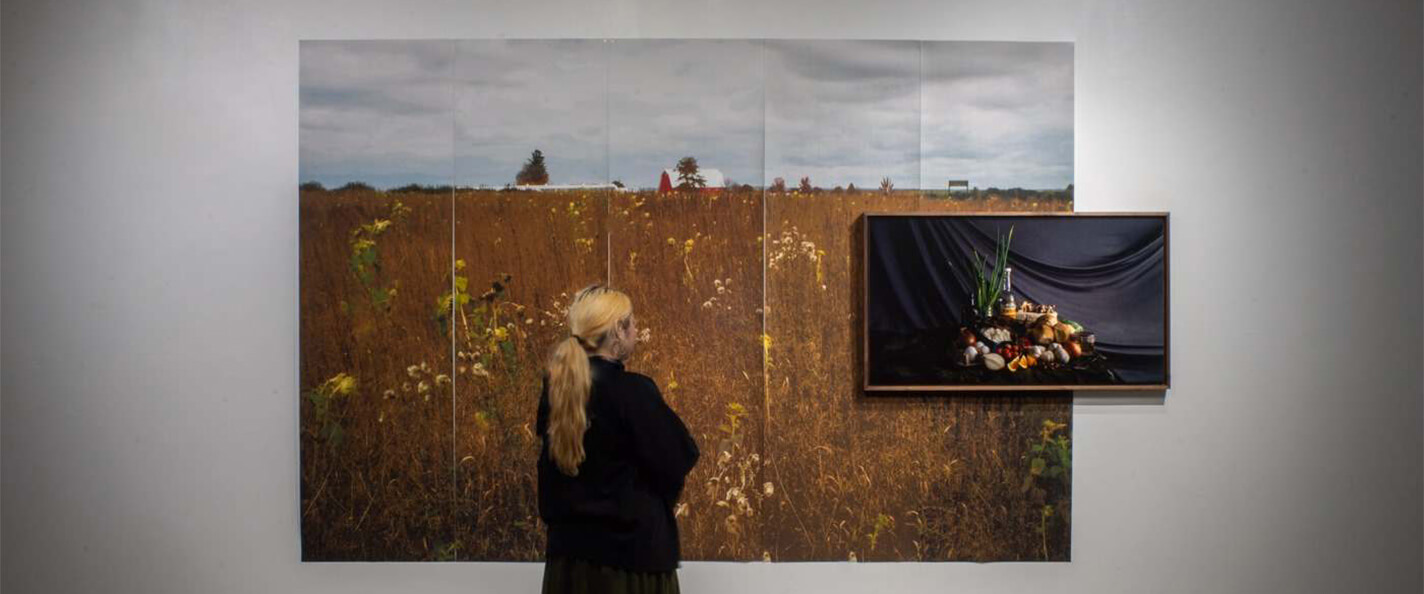
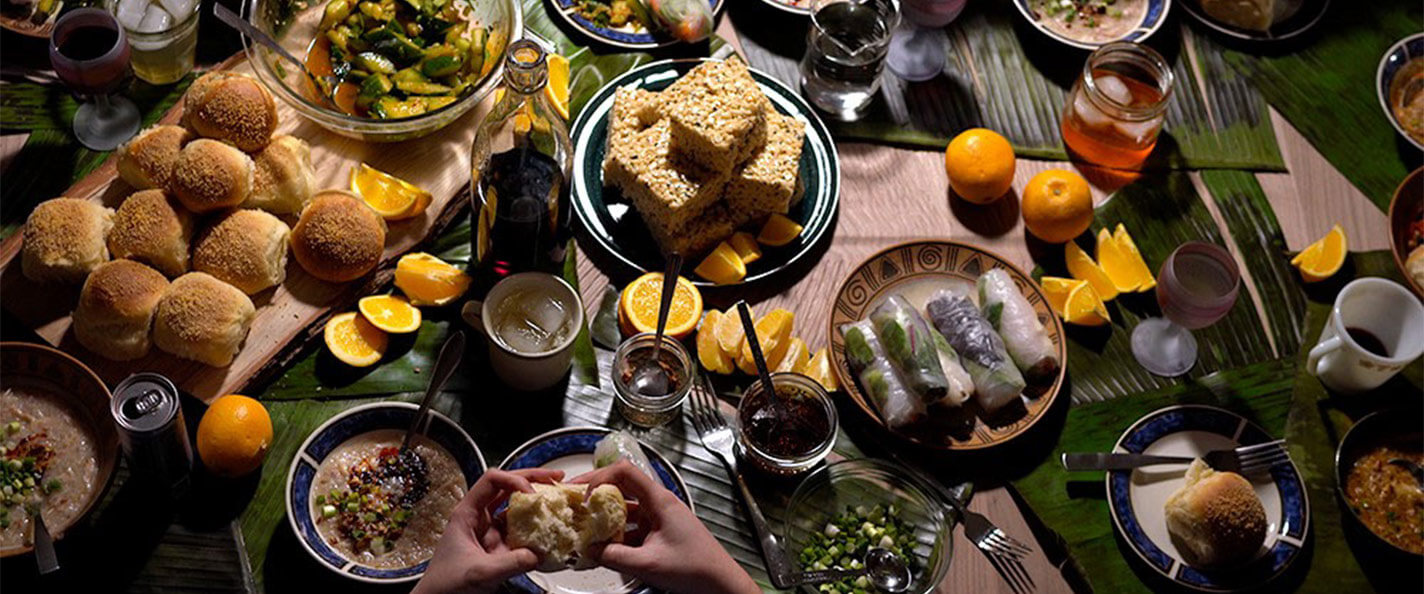
Mariah Moneda MFA’25, MFAx’28 knelt beside a table covered in banana leaves and Filipino cuisine. Guests gathered around platters of lumpia, cucumber salad, and roasted pork to share a meal inside an art gallery. The feast was the reception for Moneda’s master of fine arts qualifier exhibition, The Distance to Kababayan, but it was also part of the artwork itself.
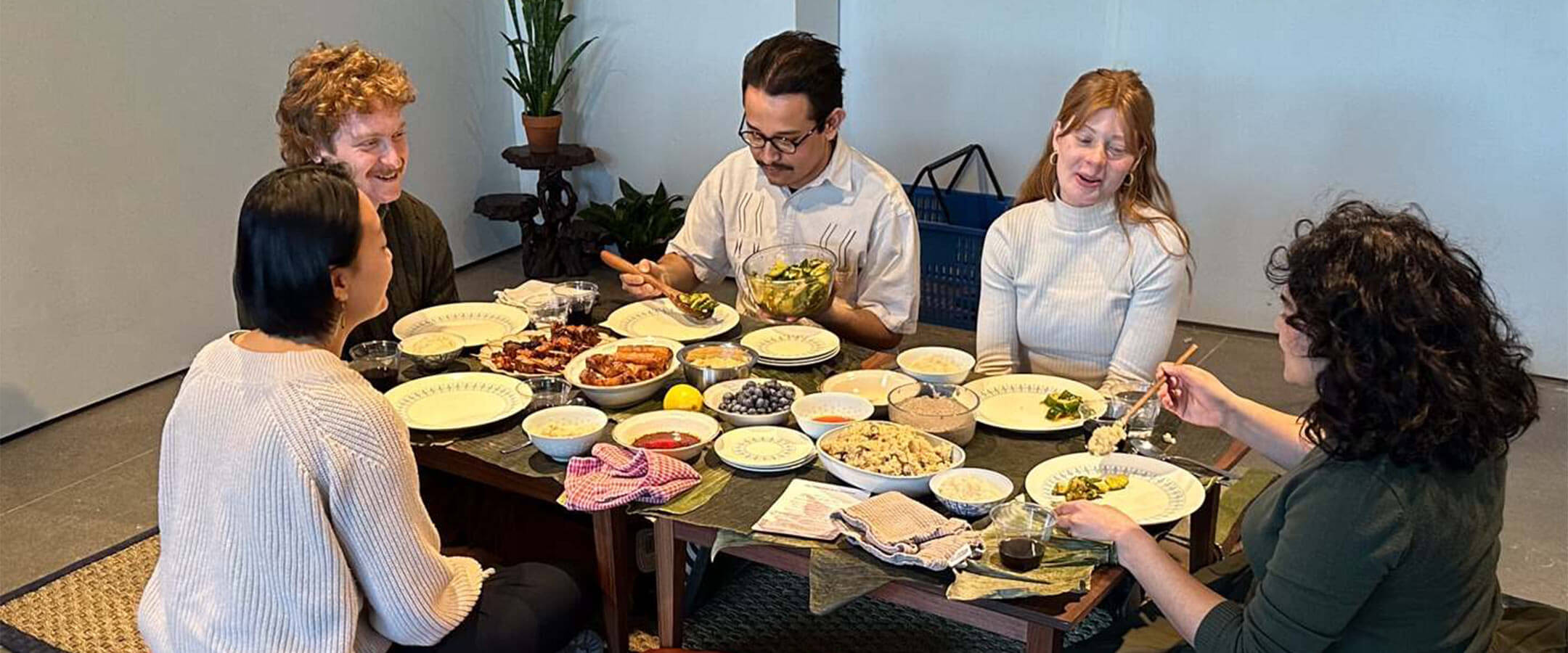
For Moneda, sharing food is an expression of kapwa, a Filipino value that has become central to her work and her understanding of community.
“There’s no direct English translation,” Moneda says. “It’s very similar to ‘treat others how you want to be treated,’ but it’s a little more codependent. It’s a community mindset versus an individualistic mindset.”
A first-generation Filipino American, Moneda grew up in a predominantly white area of Phoenix. Her grandparents taught her about Filipino culture, but she often felt caught between worlds.
“I was too Americanized for my Filipino community but also not American enough for this white community,” she says.
After earning her undergraduate degree in photography, Moneda moved to San Diego to care for her grandparents. There, she found a Filipino community in National City that offered the sense of belonging she had been missing. Neighbors shared vegetables, families gathered for meals, and everyday acts of care brought people together.
“I would deliver vegetables from all the Filipino houses in the cul-de-sac,” she says. “It felt really good to be surrounded by people who were kind of just paying it forward to each other.”
Then she moved to Madison for graduate school, leaving that community behind.
The distance made Moneda think about her family’s immigration from the Philippines to the United States, but also about what it means to build a sense of belonging in a new place. She began looking for ways to re-create the community she had left behind.
That search became part of her art.
She connected with the Filipino American Student Organization and PAMANA, a local Filipino community organization. She photographed their summer camps, helped teach weaving, and joined gatherings and picnics.
Photography had always been her way of observing and remembering. But at the UW, Moneda began thinking beyond the photograph itself. She became interested in the physical materials, traditions, and objects that connected her to her family’s history.
One of those materials was paper.
As a child, Moneda learned how to make paper butterflies from her grandmother. Years later, after an exhibition left her with photographs she no longer knew what to do with, she began folding them into butterflies. The discovery helped her realize that family traditions and community values had been quietly shaping her work all along.
“I was like, ‘Oh, it’s been here the whole time,’ ” she says. “This is important.”
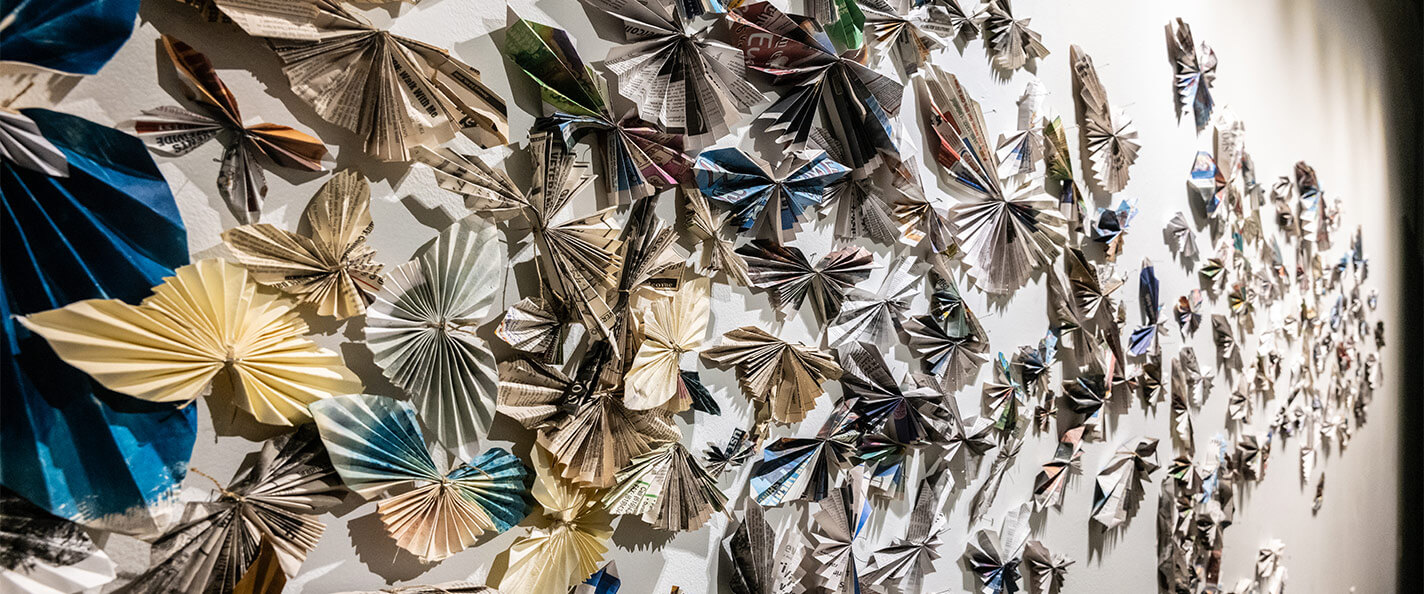
Now, in her second MFA program, this time in design and material studies, Moneda is exploring paper weaving, Filipino fibers, and digital looms. She is also returning to a family archive that includes photographs, military IDs, newspaper clippings, and other materials from her grandparents’ home.
Support future generations of Badgers with a gift to the WAA Scholarship Fund.
Make a GiftThrough that work, she examines immigration, colonialism, and the institutions that shaped her family’s journey from the Philippines to the United States. Her current projects weave together that family history, Filipino material traditions, and questions about how people carry culture, memory, and belonging across generations and borders.
For Moneda, community is not simply something to photograph or observe. It is something to participate in and build.