

As the state budget cycle approaches, UW–Madison faculty and experts told alumni and friends that two issues, rural health care along with arts and humanities, are central to the university’s mission and the state’s future.
The Wisconsin Foundation and Alumni Association (WFAA) hosted its 2026 Fall Policy Forum on November 14 at Union South. Two panels, one on the importance of humanities education and one on UW–Madison’s role in supporting rural health, prepared attendees to talk with newly seated elected officials.
“There’s not an issue that was on the ballot on November 3 that UW–Madison is not helping address,” said Mike Fahey ’89, WFAA managing director for advocacy and state relations.
Arts and Humanities: “On the cusp of a renaissance”
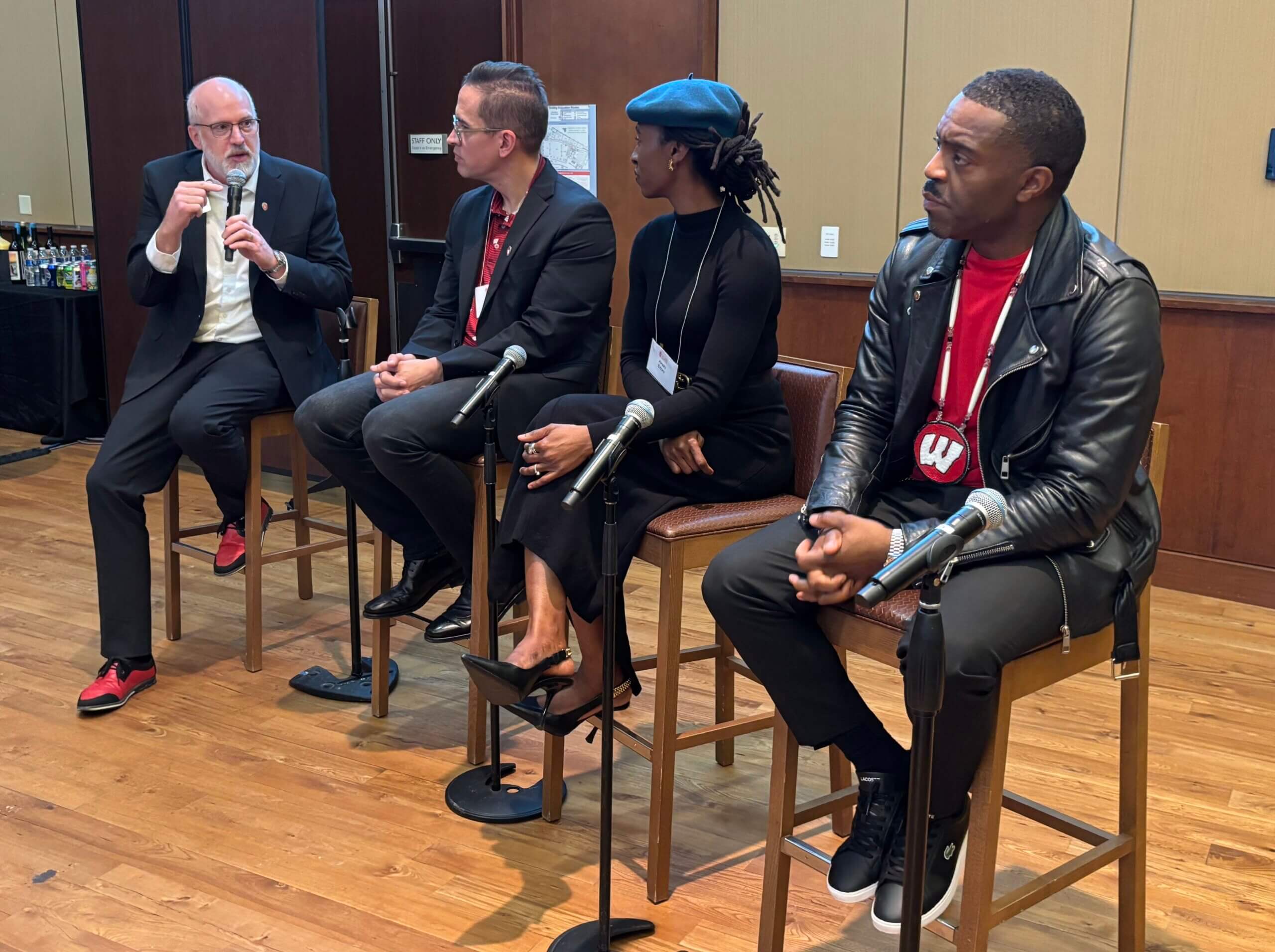
Panelists pushed back on the idea that the humanities are in decline. Grant Nelsestuen, associate dean for arts and humanities in the College of Letters & Science, said national trends of falling enrollments and program cuts have not played out at UW–Madison.
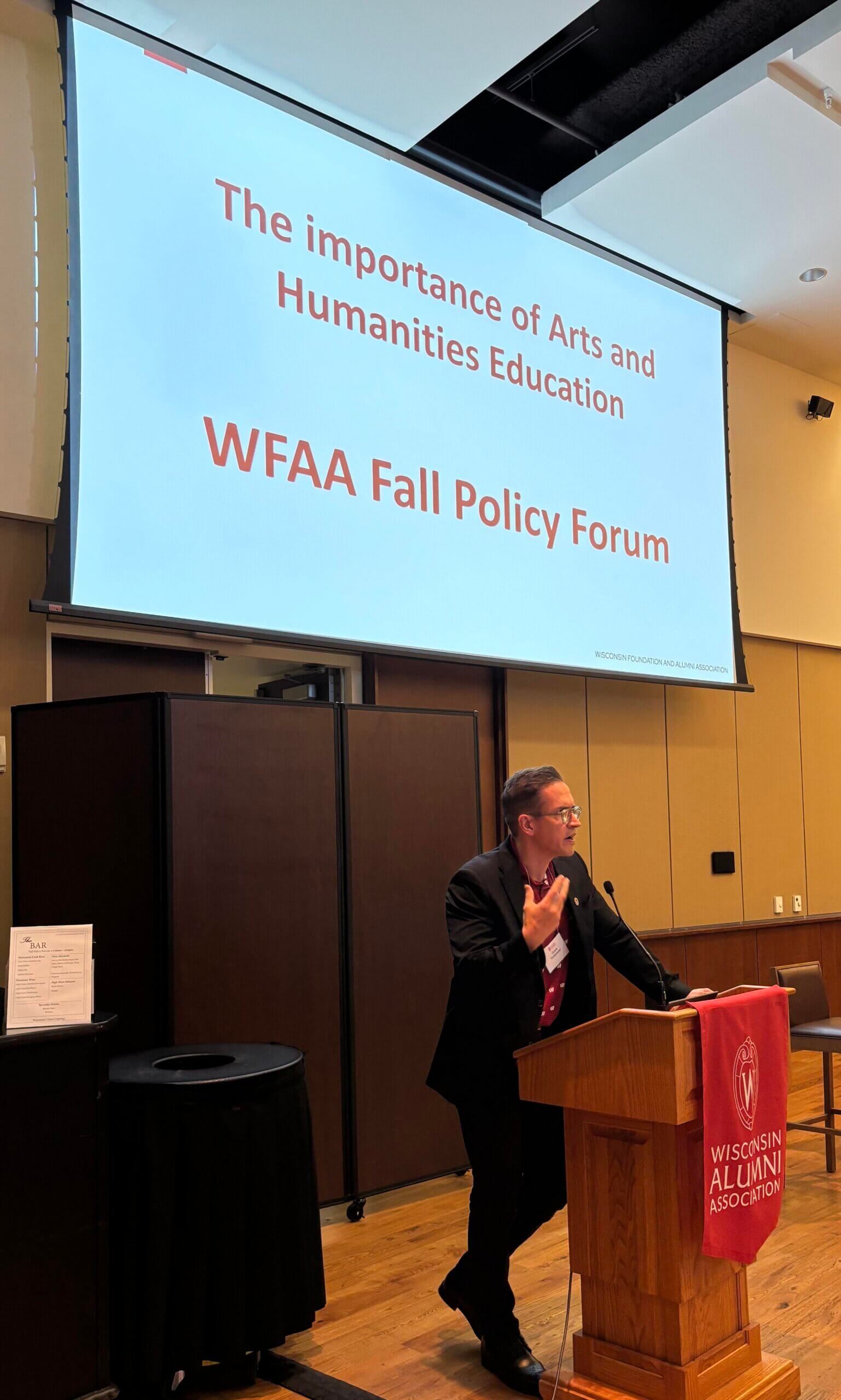
Using 2018 as a baseline, he said the Department of History has grown 15 percent in students taught and 25 percent in majors, from about 400 to 500. Philosophy course enrollments are up 23 percent, and philosophy majors are up 25 percent. Art history enrollments have grown 37 percent, and majors 10 percent. Nelsestuen credited faculty innovation, including a history certificate that boosted rather than detracted from majors, and a “history at work” seminar that connects students with alumni.
Nelsestuen said the university is also positioning itself as a leader on artificial intelligence. UW–Madison was awarded a National Endowment for the Humanities grant for the Center for Humanistic Inquiry into AI and Uncertainty — one of only five institutions to receive such a grant. A new undergraduate certificate in the ethics of data and AI, housed in the philosophy department, brings humanities and computer science majors into the same classes. “I think we’re on the cusp of a renaissance,” he said.
Ainehi Edoro, the Mellon Morgridge Assistant Professor of English and African Cultural Studies, said the humanities work like a “circulatory system” for the university. Her department teaches about 10,000 students a year, a figure Fahey noted equals roughly a quarter of UW–Madison’s undergraduates. Edoro, a faculty fellow in the AI center, said campus groups seeking to understand the technology are turning to humanists. “It’s not the computer science department, it’s us,” she said.
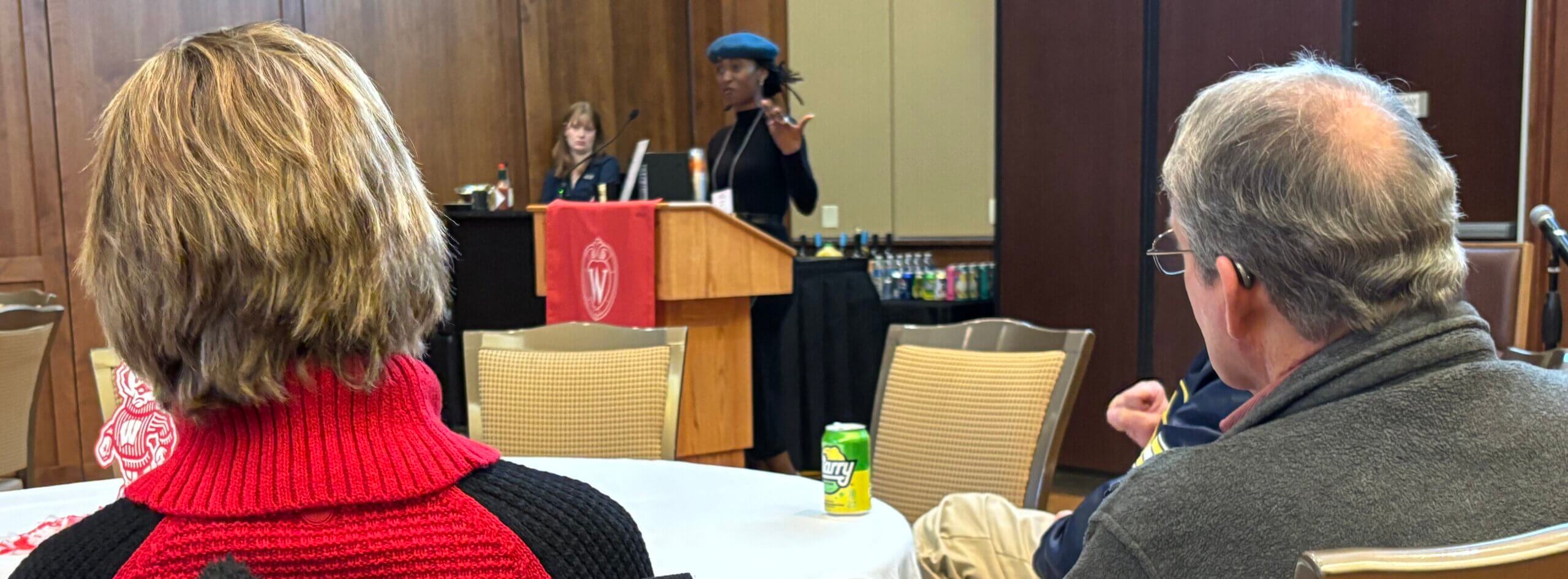
Faisal Abdu’Allah, associate dean for the arts and innovation, noted that UW–Madison was the first U.S. institution of higher education to offer a degree in dance, in 1926. He said the art department serves hundreds of majors and counts a nationally top-ranked glass program and print program among its strengths.
The building question
The panel also addressed the university’s top capital request for the 2027–29 state budget, which is to replace the current humanities building. Fahey said the project is a request of more than $400 million. Abdu’Allah said the Art Department is split between the humanities building and the Art Lofts, half a mile apart, and that the humanities building carries more than $70 million in deferred maintenance.
Under the plans described, the Art Department would be consolidated in an expanded Art Lofts facility, and the music school would expand on Lake Street. Nelsestuen said humidity, sound leakage, and cramped space strain the Mead Witter School of Music. He also noted the newly opened Irving & Dorothy Levy Hall, which now houses history, Jewish studies, African American studies, religious studies, and other humanities departments.
Rural health: A crisis of care
The afternoon panel opened with a sobering picture. Amy Kind ’96, MD’01, PhD’11, associate dean for social health sciences and programs in the School of Medicine and Public Health, said the 1.5 million Wisconsinites in rural communities face higher rates of chronic disease and shorter life expectancy. Rural residents also face longer ambulance response times; shortages of physicians, nurses, and pharmacists; and closures of obstetric services. Kind, a geriatrician who grew up in Niagara, Wisconsin, said infant deaths are rising as maternity services disappear.
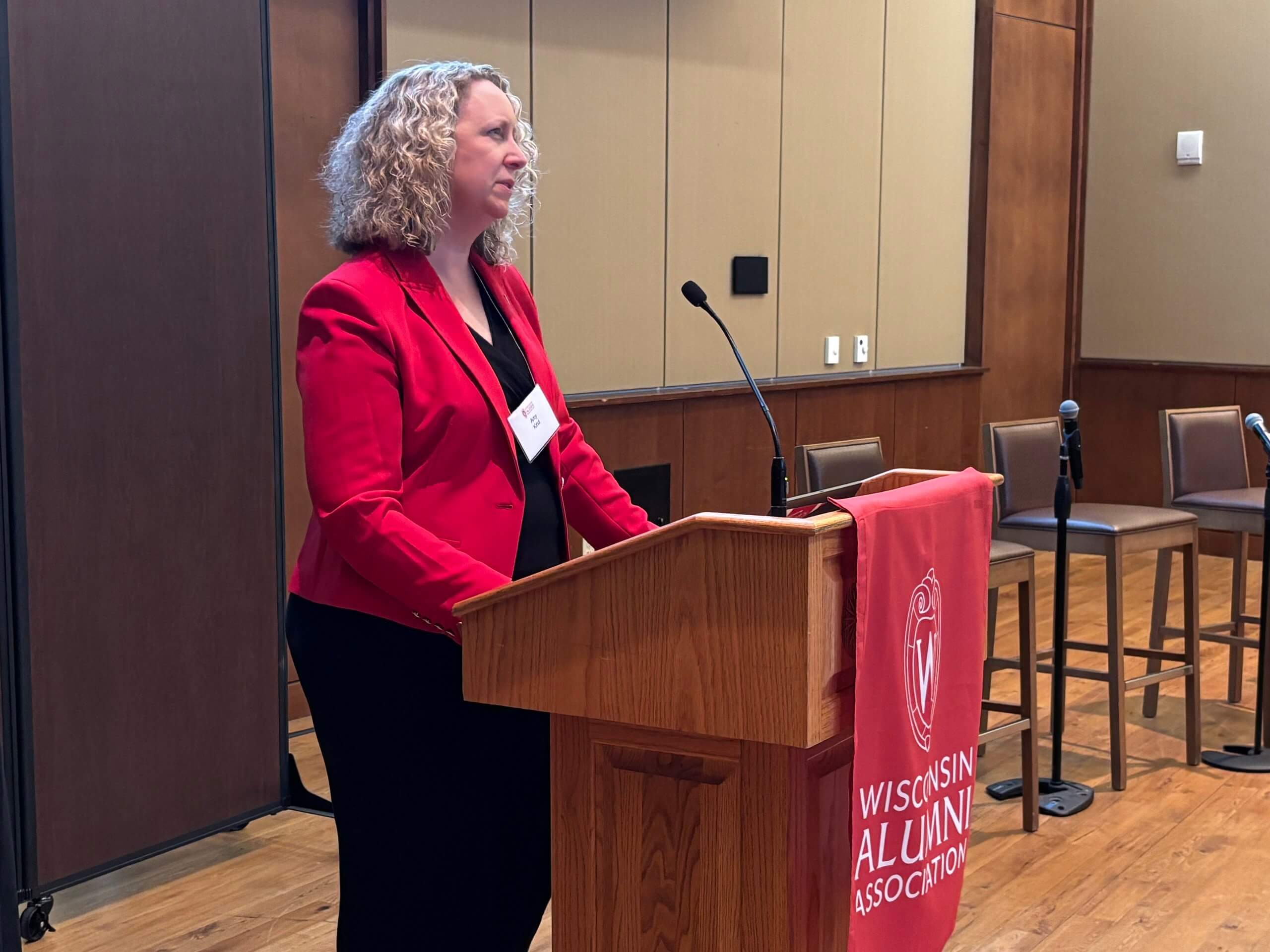
She described UW programs aimed at the shortage, including the Wisconsin Academy for Rural Medicine, rural residencies, and a donor-funded partnership initiative that pairs rural physicians with UW specialists. In its first three years, she said, the initiative has reached more than 200 rural providers and touched more than 3,000 lives, with 15 sites on a waiting list. Because the UW is the state’s only public medical school and only pharmacy school, she said, it is positioned to help fill workforce gaps. Kind said she hopes the university will have a seat at the table for the roughly $200 million a year in federal rural health transformation money expected to come to Wisconsin.
John Eich ’89, director of the Wisconsin Office of Rural Health, focused on emergency medical services. He cited a 2022 survey in which 41 percent of rural EMS services had six or fewer staff and 41 percent reported times when no one was available to respond. Nearly 30 percent lacked enough funding to last the year, and in at least 10 communities, a 911 call went unanswered. “The bill is coming due” on a volunteer system built around 1960, he said.
Eich described one solution: the Wisconsin Office of Rural Health helped four Northwoods services merge into a regional paramedic-level department, cutting response times by more than 20 minutes. He said the office is working on about five similar projects statewide. Rural health, he added, is a bipartisan issue, and the state should help share the costs of the office, which is almost entirely federally funded.
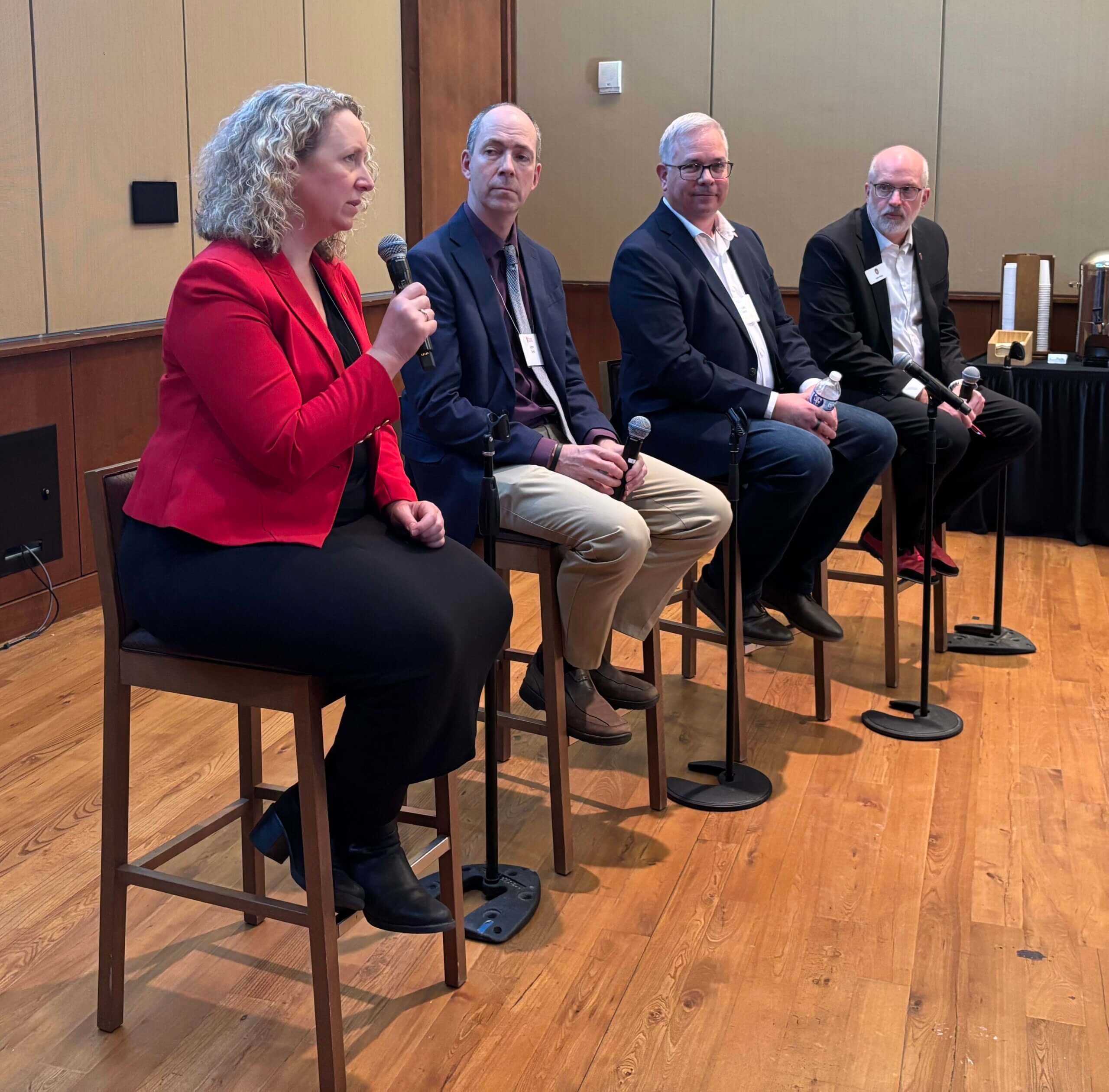
Rudolph Johnson, director of the Wisconsin State Laboratory of Hygiene, gave the audience a tour of work that rarely makes headlines. The lab, founded in 1903, screens roughly 60,000 newborns a year for undetected health issues. Johnson said wastewater testing detected measles in one location before the virus appeared in an emergency room, and that the lab tests water and fish for PFAS and other contaminants. It also analyzes about 80 percent of the state’s OWI blood tests. When asked what lawmakers could do, Johnson pointed to reducing paperwork and sharing testing standards and equipment.
Next steps for advocates
Fahey announced that the state legislature’s Joint Finance Committee had approved a public-private partnership to build two new residence halls on Dayton Street, which will add nearly 1,700 student beds. UW–Madison Day at the State Capitol will be April 28. WFAA will also host an advocacy event in Washington, DC, in the spring.
Audience members urged faculty to help alumni tell the stories behind the numbers, including making the university’s role in rural health care more visible to patients and communities. Panelists agreed, and Nelsestuen said humanities faculty are working on explaining their research to the public in plainer terms.


